There is a particular pleasure in turning a corner and recognising somewhere you have never actually been. A courtyard becomes Hogwarts. A country house becomes Pemberley. A quiet garden suddenly belongs to a scene involving a very badly timed marriage proposal.
Visiting filming locations can make a historic day out feel more playful. But it also raises a practical question: can you visit the part you recognise, or is the famous room closed while the gift shop remains enthusiastically open?
This guide covers six real filming locations in England, with the production, the relevant space and the checks that matter before you book. It is a selection of UK days out, not a claim that all screen locations are concentrated in England or that these places fit into one road trip.
Featured photograph by Swati Kedia on Unsplash · View original and licence
Start with the scene, not the postcode. Alnwick suits outdoor Hogwarts fans; Lacock combines abbey interiors with a lived-in village; Lyme is the 1995 Pemberley; Stourhead is the 2005 proposal garden. For Bridgerton, consider Claydon or Blenheim—but confirm the house or room access, not just whether the estate is open.
Which destination is right for your kind of visit?
| Destination | Recognisable production | The connection to look for | The planning question |
|---|---|---|---|
| Alnwick Castle, Northumberland | First two Harry Potter films | Castle exteriors and the first flying-lesson location | Is the castle open, and are any activities operating? |
| Lacock, Wiltshire | Harry Potter; Pride and Prejudice, 1995 | Abbey spaces and village streets | Does your visit include the abbey as well as the village? |
| Lyme, Cheshire | Pride and Prejudice, 1995 | Pemberley’s exterior and grounds | Are the garden and the viewpoint you want accessible? |
| Stourhead, Wiltshire | Pride and Prejudice, 2005 | Temple of Apollo and garden sequences | Can your party manage the approach to the temple? |
| Claydon, Buckinghamshire | Bridgerton, series three | Featherington wedding-breakfast setting | Is the house open on your chosen date? |
| Blenheim Palace, Oxfordshire | Spectre; Bridgerton, series three | Great Court and several palace interiors | Which ticket and visitor route cover the spaces you want? |
These connections are documented by the attractions or the National Trust in the sources below. They do not mean the entire fictional building was filmed at one property. An exterior, a doorway and the room behind it can have very different real-world addresses.
1. Alnwick Castle: find the outdoor Hogwarts
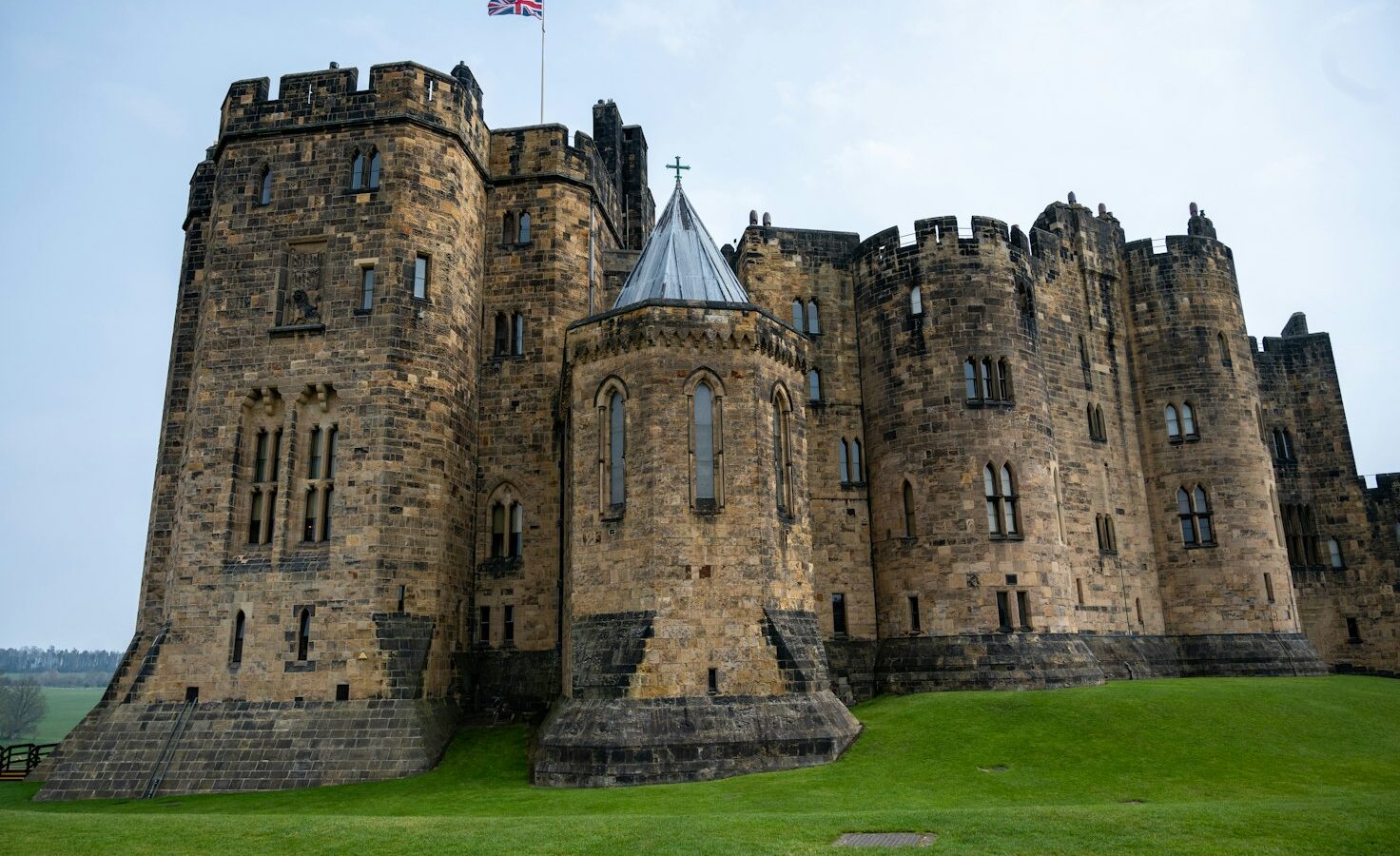
Alnwick is a particularly rewarding starting point if your mental picture of Hogwarts involves courtyards, lawns and broomsticks rather than a studio set. The castle confirms its appearance in Harry Potter and the Philosopher’s Stone and Harry Potter and the Chamber of Secrets in its Harry Potter filming guide.
The Outer Bailey is associated with the first flying lesson. That gives you something more specific to recognise than simply “an old castle that looks magical”. Start with the layout of the courtyard and surrounding walls; the point is to notice how a real location becomes part of an imagined school.
The castle also offers Broomstick Training. At the research check, it was included with entry but required a timed ticket collected on arrival, with sessions dependent on conditions. Treat the activity as something to check, not a guaranteed appointment included in every visit.
Make it a day out: pair the film connection with the castle’s historic rooms, grounds or available tours. Consult the visitor calendar for your actual date, especially outside the main visiting season. Do not buy transport first and assume a castle operates like a year-round city museum.
2. Lacock: Hogwarts inside, village life outside
Lacock has two different experiences, and confusing them is the easiest way to under-plan the visit. There is the village, with streets used in period productions, and there is the abbey, whose spaces appeared in the Harry Potter films.
The National Trust’s Harry Potter location guide explains the abbey and village connections. Its filming overview also identifies Lacock village as Meryton in the 1995 adaptation of Pride and Prejudice.
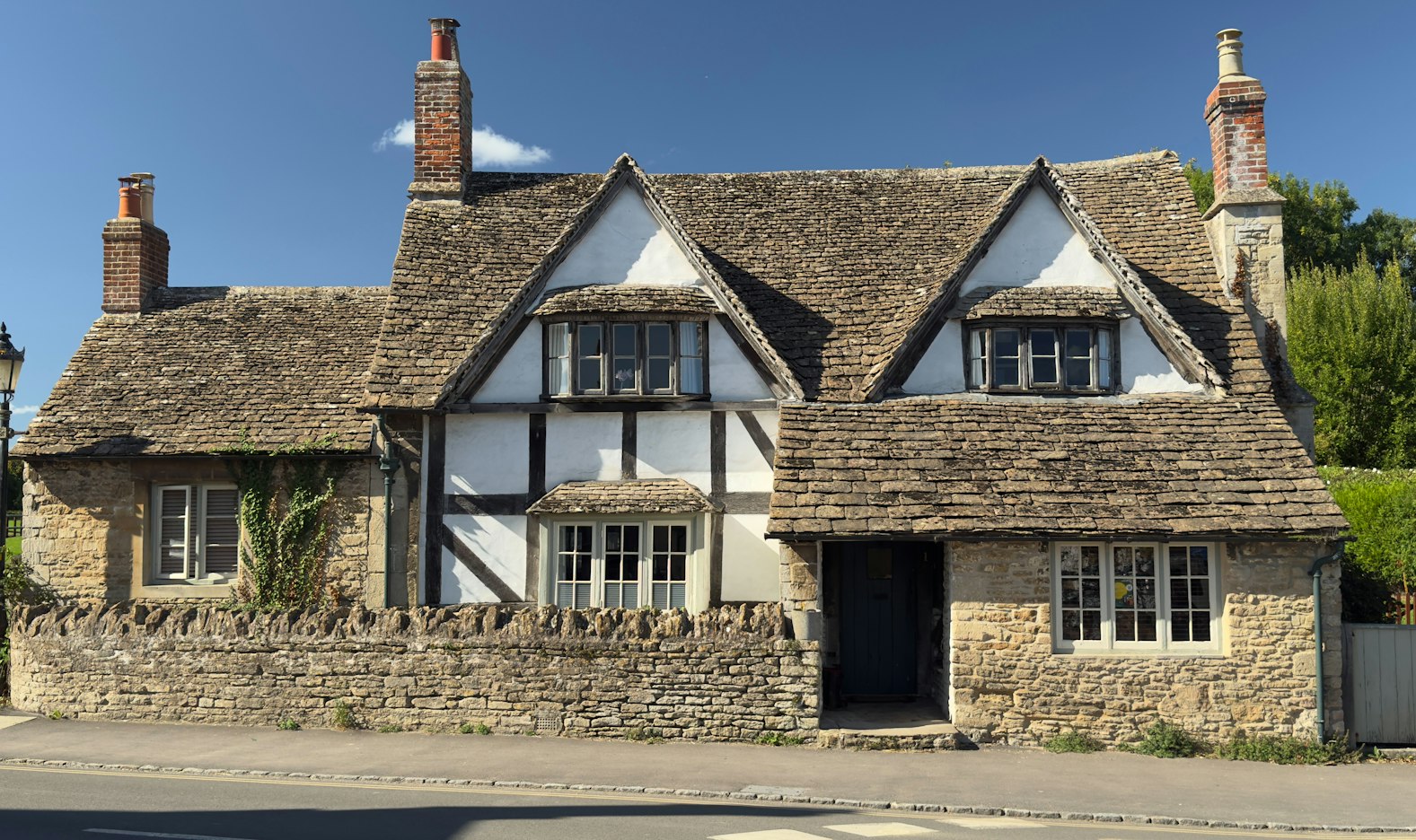
Photo by Andrew Moore on Unsplash · View original and licence
Plan an abbey visit and a village wander as separate parts of the day. Check the Lacock visitor page for the areas included in admission and their opening arrangements. A village walk does not automatically give access to every interior used on screen.
The best approach is to notice details slowly: an arch, a stretch of stone corridor, the way modern surroundings disappear when you look in one direction. You do not need to identify every shot to enjoy the transformation.
Be a visitor, not an extra with unlimited access. Lacock is also a place where people live. Keep to public areas, leave doorways clear and do not enter gardens or lean through windows because a house appears on a filming map. A photograph is not an entitlement to someone’s privacy.
3. Lyme: choose the right Pemberley
Mention Pemberley and two people may picture entirely different houses. For the BBC’s 1995 Pride and Prejudice, Lyme supplied the exterior and grounds of Mr Darcy’s home, as the National Trust confirms in its Jane Austen filming guide.
That distinction matters. This is not a promise that every Pemberley interior from every adaptation is behind Lyme’s front door. If you are planning around a specific version, write down its year before comparing destinations.
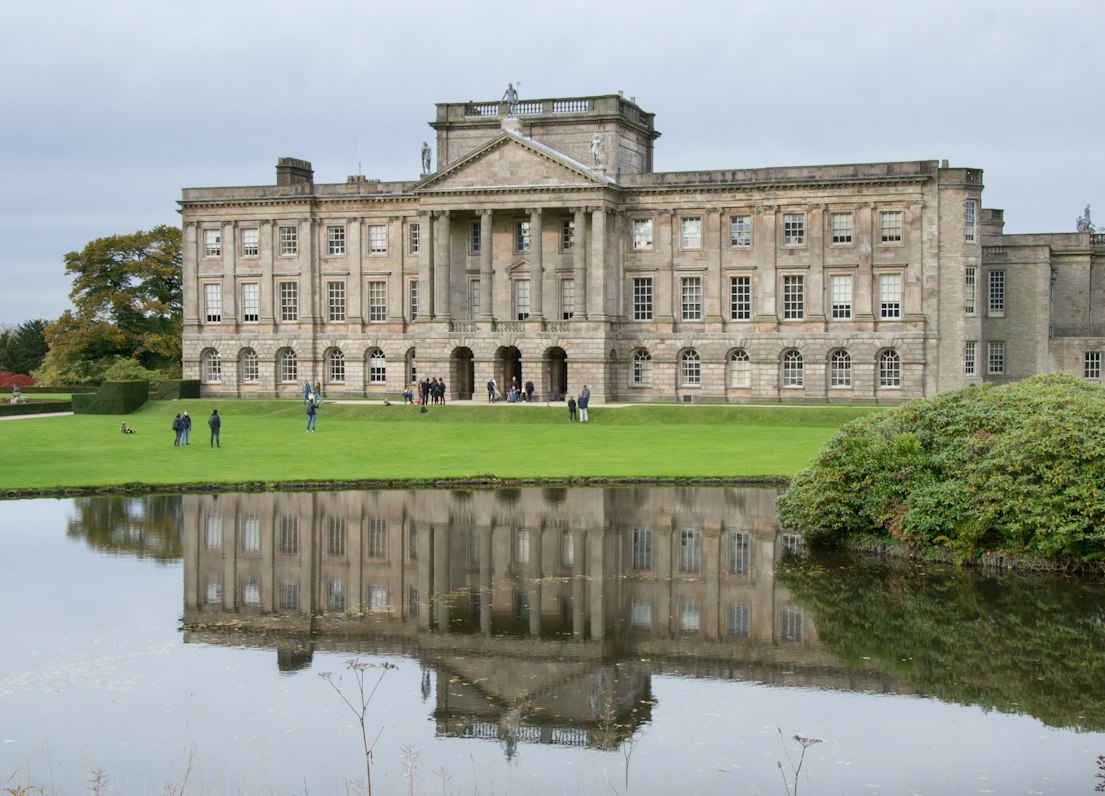
Photo by Dan Stephens on Unsplash · View original and licence
For a satisfying visit, give yourself time to take in the house from the garden rather than running straight inside. The recognition comes partly from the relationship between the building, the water and the grounds. Let your first impression happen before you start hunting for the perfect camera angle.
Check the current Lyme visitor information for house and garden access, facilities and any restrictions. Decide whether the exterior connection alone would make the journey worthwhile if an interior area were unavailable.
Leave the famous swimming association on screen. A film scene is not permission to enter the water. Stay on visitor routes and follow site instructions. The day can be thoroughly Austen-like without wet clothes, a rescue or an awkward discussion with the property team.
4. Stourhead: the proposal is not at the mansion
Stourhead belongs to a different adaptation. The Temple of Apollo and garden appear in the 2005 Pride and Prejudice. National Trust material identifies the temple as the setting for Darcy’s first proposal; its Stourhead film-event description also explains the garden sequence and the temple approach.
The practical implication is simple: booking a visit to the mansion is not the same as planning the scene you came to see. Start with the garden map and locate the Temple of Apollo, rather than assuming that the largest classical building in a photograph is the proposal setting.
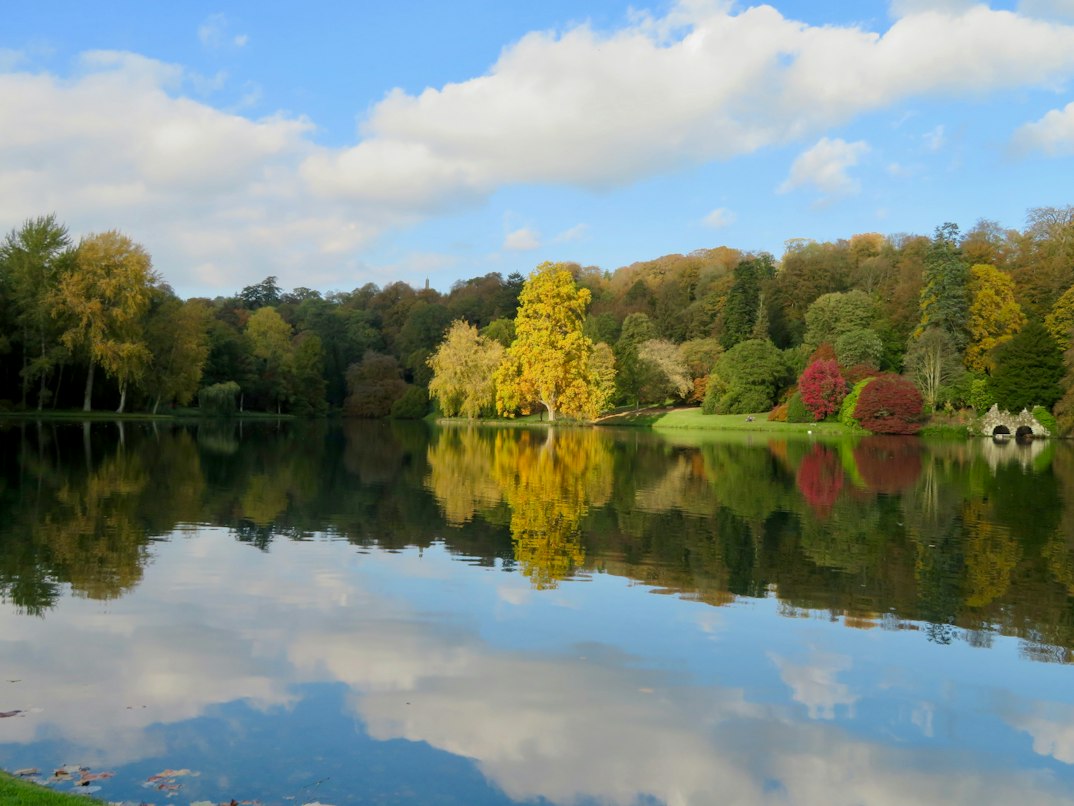
Photo by Simon Harmer on Unsplash · View original and licence
There is an access point worth knowing in advance. The National Trust describes a steep cobbled approach and steps to the temple balcony. An enjoyable garden visit may be possible without making that climb, but the exact viewpoint needs individual consideration. Ask the team about appropriate routes; do not assume special transport arrangements for an event are available on an ordinary day.
Make it a garden visit with a film connection. Take in the water, changes of viewpoint and buildings along the way. Use the main Stourhead page for ordinary admission and access arrangements. This is a place to explore, not just the backdrop for one recreated pose.
5. Claydon: a more specific Bridgerton stop
For Bridgerton fans, Claydon offers a useful alternative to an enormous list of stately homes with vague screen associations. The National Trust confirms that it hosted the Featherington wedding-breakfast setting in series three in its filming-location account.
The attraction here is the interior character. Rather than asking only “where did the actors stand?”, look at how the decoration contributes to the fictional household. A location becomes much more interesting when you start recognising why a production chose it.
Opening arrangements are the important caveat. Check the Claydon house calendar for the exact day. An estate café, courtyard business or nearby garden being open should not be treated as confirmation that the National Trust house is admitting visitors.
Best for: someone who enjoys decorated interiors and wants a focused Bridgerton connection rather than a full-day film-themed attraction. Ask which spaces are on the visitor route before paying for travel specifically to see one room. Production use and ordinary visitor access are related questions, but they are not the same question.
6. Blenheim: Bond outside, Bridgerton inside
Blenheim’s official filming timeline makes this one unusually easy to research. Spectre used the Great Court; Bridgerton series three used several spaces, including the Great Hall, Saloon, State Rooms, Long Library and Water Terraces.
That gives a mixed-interest group a useful choice. Someone who loves Bond can recognise the courtyard setting, while someone more interested in costume drama can look for the interior spaces. Neither needs the other to memorise an entire filmography.
Make sure your chosen admission covers the palace interiors if those are the priority. Check current visitor routes and any closures rather than relying on a filming list as a list of rooms guaranteed open today.
Blenheim also has a much larger story than its screen appearances. For the palace’s history, Churchill Exhibition and suggestions for the wider estate, use our full guide to visiting Blenheim Palace. This article is the location shortlist, not a replacement for planning the individual visit.
How to plan a trip that survives one closed room
Before booking, choose your must-see, your nice-to-see and your alternative. At Alnwick, the must-see might be the courtyard, the extra might be an activity, and the alternative a general castle visit. At Claydon, the interior itself may be the whole reason for going, making the house calendar decisive.
Then ask four questions on the official website: is the place open, is the relevant area open, does the ticket cover it, and can everyone in your party reach it? Save the answer or booking confirmation somewhere easy to find. A generic search result showing “open today” cannot answer all four.
Use live prices when comparing the total cost. Add parking, transport, admission and food, and check whether membership covers the particular attraction. A special tour or separately managed garden may have different arrangements from the house beside it.
Finally, have a plan for rain. An outdoor film location can still be worth visiting, but there is a difference between choosing a damp garden stroll and discovering that the only scene you wanted involves standing outside for an hour.
Two examples of a well-paced itinerary
For a single day: choose one property, arrive with your main scene identified, and spend the first part of the visit finding it. Then put the phone away and explore something you did not already know about the place. Finish with food or a short walk rather than racing to another distant destination.
For a short break: a Wiltshire trip could give Lacock and Stourhead separate days, with accommodation and journeys checked around your own arrival point. That is an itinerary suggestion, not a claim that the properties are neighbouring stops. Northumberland, Cheshire and Oxfordshire are separate travel choices, not extras to squeeze into the same weekend.
For gentler outdoor ideas, see our route-specific guide to easy autumn walks. Check the actual route rather than assuming a beautiful film garden is automatically an easy walk.
Make photographs without remaking the production
Bring a reference image for your own use if it helps you recognise a viewpoint, but respect photography restrictions and other visitors. Do not climb barriers, obstruct a doorway or ask everyone else to leave the courtyard so your picture matches the film.
Expect differences. Costumes, lighting, set dressing and editing are part of the screen experience. A place looking different in ordinary daylight does not make the visit a disappointment; it can be the most interesting part of seeing how the scene was constructed.
The photographs accompanying this guide show the real locations, not film stills. In particular, a general garden photograph should not be mistaken for evidence that the photographed building was used in the specific scene discussed.
The best location is one you would enjoy after recognising it
Start with a production you genuinely love, then choose a place that offers enough for the rest of the day. Hogwarts recognition lasts a moment. A courtyard, a historic collection, a garden and a good conversation can fill the afternoon.
You do not need to collect six destinations. Pick one, confirm the relevant access and leave enough time for the real place to become more than its fictional role.
That is when a filming-location visit stops being a screenshot hunt and becomes a day you will remember for yourself.
Sources and further reading
- Alnwick Castle: Harry Potter locations
- Alnwick Castle: Broomstick Training arrangements
- National Trust: Harry Potter filming locations
- National Trust: Jane Austen film and television locations
- National Trust: filming locations, including Lacock and Claydon
- Stourhead: proposal-scene location and temple-access detail
- Claydon: house calendar and admission
- Blenheim Palace: official filming timeline