A heritage membership can be a good excuse to leave the house. It can also become a rather expensive card that spends the year next to a supermarket loyalty card you use much more often.
The difference is usually not which organisation has the most impressive national total of attractions. It is which places you will genuinely visit, how often you will go and which parts of those outings your group can enjoy.
This comparison uses current standard membership prices, then shows you how to do a realistic value check. There is no universal winner—and “neither, for now” is a perfectly sensible answer.
Featured photograph by Dr Maureen Wright via the WordPress Photo Directory · View original and CC0 licence
Choose places before choosing a pass. Write down your next four realistic outings, check who manages them and compare the admission and parking you would actually pay with the relevant membership cost. Count a return visit only when you would genuinely make it.
What is the basic difference?
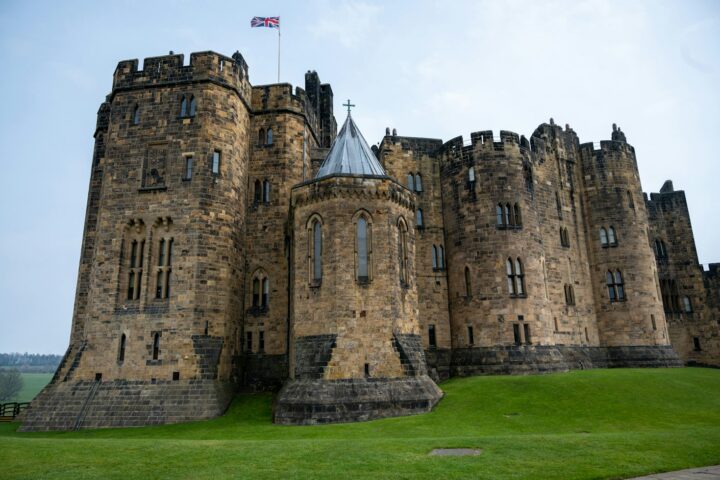
As an editorial starting point, think about whether you are more excited by gardens, countryside and historic houses, or castles, abbeys and archaeological sites. That can help you begin a shortlist, but it is not a hard division between the organisations.
For example, Stourhead is a National Trust destination combining its house and landscape garden. Whitby Abbey is an English Heritage destination with dramatic ruins. They offer very different reasons for going out, not two versions of the same product.
Do not assume that a historic attraction belongs to either organisation simply because it has a grand entrance and a tearoom. Check the operator and the particular admission benefit before putting it on your membership savings list.
A place can be an excellent day out without being included in the pass you are considering.
Standard annual prices: compare the same household
The following prices were checked on 11 September 2026, using the official National Trust membership page and English Heritage joining page. They exclude temporary promotions and life membership.
| Standard annual option | National Trust | English Heritage |
|---|---|---|
| Individual adult, aged 26+ | £100.80 | £84 |
| Joint adult | £168 | £149 |
| Family with one adult | £109.20 | £84 |
| Family with two adults | £176.40 | £149 |
Eligibility is not identical. National Trust joint adult membership covers two adults aged 26+ at the same address; English Heritage joint adult membership starts at 18+. Family and younger-person options have their own conditions, so check the correct category rather than automatically selecting the first adult price.
National Trust family membership includes named children or grandchildren aged 17 and under. English Heritage states that up to six accompanying children under 18 within the family group are included per adult member. This matters when comparing a one-adult household or outings with grandchildren.
The lower annual price is useful information. It is not enough to establish better value.
Benefits that matter—and benefits you should not count twice
Both organisations advertise admission benefits, but membership does not mean every possible cost of a visit disappears. Special events, food, travel and other optional experiences require their own checks.
Parking is an important example. The National Trust’s parking guidance says most of its parking is free for members, except that Junior membership does not include this benefit. It also explains that validation arrangements can differ between places.
English Heritage’s member guidance similarly describes free parking at most sites, with exceptions where parking is not managed by English Heritage. Some events still carry a member charge.
For your calculation, include only the parking charge you would otherwise pay. If admission already includes it, do not add it a second time. If the car park is free to everybody, the membership saves you nothing on that line.
And do not count a £30 lunch as a membership saving just because you eat it during a member visit. The lunch is still a purchase.
The four-visit test
Choose four places you would seriously consider visiting during the membership year. They need not all be different: a nearby garden you would revisit in another season can be more realistic than a distant castle you admire online.
For each one, record the group going, the likely date, non-member admission, unavoidable parking and the amount still payable with membership. Use the correct age and family options for your group.
| Planned outing | Admission without membership | Extra parking without membership | Costs still payable with membership |
|---|---|---|---|
| First realistic visit | Enter current price | Enter only if additional | Enter member charges |
| Second realistic visit | Enter current price | Enter only if additional | Enter member charges |
| Third realistic visit | Enter current price | Enter only if additional | Enter member charges |
| Fourth realistic visit | Enter current price | Enter only if additional | Enter member charges |
Then calculate:
Potential saving = non-member admission and additional parking avoided − remaining member visit charges − annual membership.
Travel and meals that are identical either way cancel out of this membership comparison. Additional journeys you make only because you bought the pass still belong in your wider household budget.
Keep the assumptions beside the figures. That is what makes the answer useful next month when one of your plans changes.

Photo by Nathan Wrigley via the WordPress Photo Directory · View original and CC0 licence
Worked example: a solo visitor
Suppose four National Trust outings would cost one adult £23, £28, £19 and £26 in admission. These are invented example prices, not current quotes for named attractions. Assume no additional parking savings or member charges.
The total is £96. Against annual adult membership of £100.80, membership costs £4.80 more on those plans alone.
Now add one genuine return visit that would otherwise cost £18. The avoided admission becomes £114, leaving a potential £13.20 saving.
Neither result tells you that five visits is a universal break-even point. The answer depends on the actual prices and what you would do without membership. Four expensive outings can be enough; several free-entry outings may never produce an admission saving.
In a separate hypothetical English Heritage itinerary, four avoided admissions of £18, £22, £24 and £28 total £92. Against £84 membership, that leaves £8. These are different imagined outings, not evidence that English Heritage delivers the same experiences more cheaply.
What changes for a couple or family?
For a couple, compare the appropriate joint option with the actual cost of two admissions. Do not compare a joint subscription against a single visitor’s ticket prices.
For a family, use the family ticket you would buy without membership, not necessarily the sum of every individual ticket. Check children’s ages and which adults are travelling. A plan involving different accompanying adults may need a different membership arrangement from a plan involving the same two people every time.
Here is a useful question: who is likely to go when one adult is unavailable?
If one person often takes the children independently, compare that real pattern. If grandparents usually join, verify their admission arrangements rather than treating “family” as unlimited admission for anybody related to you.
For disability-related access or companion arrangements, consult the relevant organisation before paying for an extra membership solely for a supporting companion. The National Trust membership information links to its Essential Companion pass; individual needs and the destination’s access details should guide planning.
Your nearest useful place may matter more than the famous one
Draw up two shortlists: outings within a distance you will comfortably repeat, and places near holidays already planned. A trip requiring accommodation and a long drive should not be treated as equally likely as a garden near home.
Then give each visit a confidence label: planned, plausible or wishful. Use planned visits for the conservative calculation. Add plausible ones to a second scenario. Leave wishful ones out of the savings headline.
This avoids a common trap: buying a membership for the person you imagine becoming, rather than the weekends you actually have available.
Our autumn-walks guide and film-location guide can help with ideas. Check each attraction’s operator, included areas and any additional ticket before entering a saving. A filming connection alone does not make admission part of either membership.
Taking the dog changes the value calculation
A property with a spectacular interior is not automatically good value for a group that will spend the whole visit outdoors with a dog.
Compare the parts you can use together. At Lyveden, the National Trust explicitly allows dogs on short leads in several indoor areas, including the café. At Canons Ashby, ordinary dogs are generally limited to outdoor areas, with further restrictions.
Both may belong on your shortlist, but they are not interchangeable on a wet afternoon.
Our dog-friendly Northamptonshire guide makes those differences easier to compare. For membership purposes, count the outing you would actually make—not the full theoretical value of rooms your group cannot enter together.
Check the calendar before counting a visit
An annual membership is not a promise that every property and facility is open every day. Check the specific house, garden, café and any timed-entry requirements against your likely dates.
This is especially important when your free days are mainly outside weekends or during particular school holidays. A national list of attractions can look generous while your realistic calendar remains quite limited.
Put a provisional date beside the first two outings. If you cannot find suitable dates, pause before buying. If you can, you have a more grounded reason to join than a vague intention to get out more.
For events, check the member price and booking process separately. English Heritage’s guidance makes clear that some events require payment even for members. Never assume that a seasonal trail or evening event is ordinary admission in disguise.

Photo by Dr Maureen Wright via the WordPress Photo Directory · View original and CC0 licence
Monthly payment is not automatically monthly membership
A price shown “per month” can be an instalment towards a year’s membership rather than a subscription you can stop after one visit.
Both official joining pages describe monthly Direct Debit arrangements across twelve payments. Read the actual payment commitment, renewal and cancellation terms before purchasing. Do not build a one-month bargain around an annual product.
Also check who the membership is for before buying it as a gift. A thoughtful present should fit the recipient’s transport, interests and available time. A very beautiful handbook does not solve the fact that their nearest useful destination is inconvenient to reach.
When neither membership is the best choice
Paying individually can be sensible when your plans are uncertain, most preferred places are outside either organisation, or you would use the membership only for one low-cost outing.
It may also be sensible to delay buying until your first planned visit, provided the terms and availability still work. There is no prize for starting the membership clock months before you are ready to use it.
Supporting conservation and heritage can be a valid reason to join even without a cash saving. Just separate that reason from a claim that membership necessarily reduces your spending.
You are allowed to value the work an organisation does and still conclude that individual tickets fit this year’s budget better.
A decision you can make this evening
Give yourself a short planning session rather than comparing every property in Britain. Pick four realistic visits. Check the correct household membership. Enter ordinary admission, additional parking and remaining member charges. Run a conservative scenario, then one that includes plausible repeat visits.
Finally, ask whether you like the resulting itinerary. A pass that saves £15 on days you do not particularly want is not an obvious improvement on paying for one outing you will love.
Choose National Trust when its places fit your real calendar. Choose English Heritage when its places do. Choose neither when the numbers or the outings do not work. The useful membership is the one you use—not the one that wins a national comparison table.
Sources and further reading
- National Trust: membership prices and eligibility.
- National Trust: parking and membership validation.
- English Heritage: membership prices and benefits.
- English Heritage: member benefits, parking and event questions.
- National Trust: Stourhead visitor information.
- English Heritage: Whitby Abbey visitor information.
Prices checked 11 September 2026. Admission examples are hypothetical. This independent comparison does not imply endorsement by either organisation.