Category: Anita’s Kitchen

  • Bábovka for a British kitchen: the Central European cake with many family versions
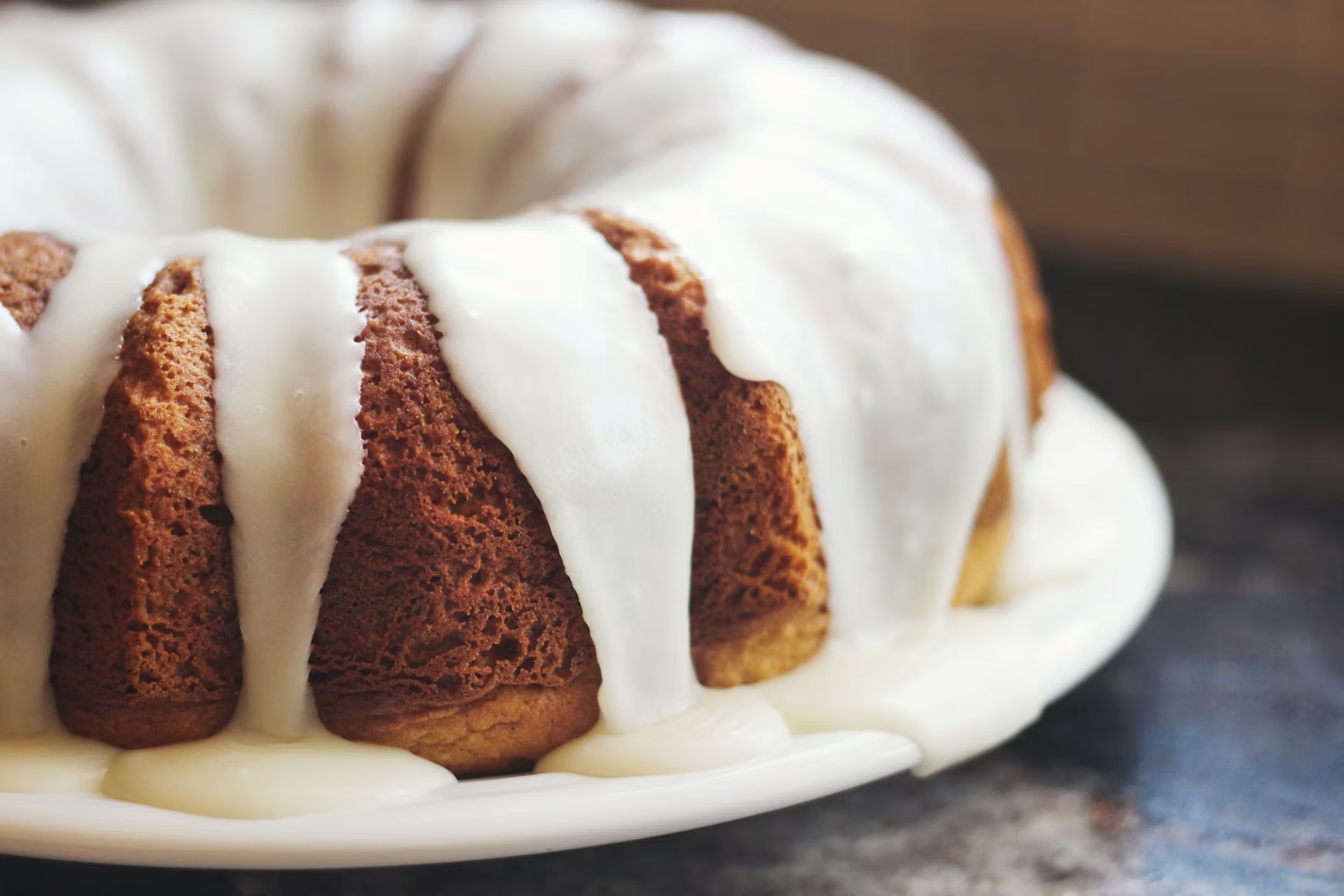
    Bábovka for a British kitchen: the Central European cake with many family versions

    There is no single bábovka waiting to be authenticated. In one kitchen it is a light vanilla-and-cocoa marble cake; in another it contains ground walnuts, lemon zest, raisins, yoghurt, cream or tvaroh. Some versions are raised with baking powder, while older forms may use yeast. What unites them is the deeply shaped ring mould, the generous slice and the expectation that the cake belongs beside coffee rather than beneath restaurant spotlights.

    In Czech it is bábovka; related cakes travel under names including Gugelhupf, Kugelhupf and Hungarian kuglóf. The mould’s ridges make the cake immediately recognisable—and make careful preparation essential.

    A cake defined partly by its shape

    Two decorative antique copper ring-cake moulds
    Photo by Monica Campagnoli on Unsplash

    The European ring cake predates the American trademarked Bundt pan, although a modern Bundt tin is the practical British substitute. Traditional moulds can be ceramic, enamelled metal or decorative copper. The central chimney helps heat reach the middle of a substantial batter, while the ridges create more browned edge and a pattern needing little decoration.

    That shape also creates corners where cake can remain attached. Most bábovka disappointments happen at one of three points: the tin was not prepared thoroughly, the batter was underbaked in a deep mould, or the cake was turned out at the wrong moment.

    Why recipes differ so much

    Mixing bowl, whisk, eggs and flour prepared for baking
    Photo by Monika Grabkowska on Unsplash

    Bábovka is a category of home cake rather than one protected formula. Czech Radio and Czech Television recipe archives contain multiple forms, including whipped-cream, poured yeast, cup-measure and creamed-butter versions. Contemporary Czech recipe writers likewise describe countless household recipes.

    The familiar marbled version divides a pale batter and flavours part with cocoa. Spoonfuls are alternated in the tin and lightly drawn together, creating a pattern that is revealed only when sliced. Walnut versions replace some flour or add ground nuts. Tvaroh versions are richer and moister. Yeasted versions sit closer to the older Gugelhupf tradition.

    The useful question is therefore not “Which is the only real recipe?” but “What texture is this family trying to preserve?”

    Translating the ingredients into a UK kitchen

    Czech polohrubá mouka—a semi-coarse wheat flour—has no perfect everyday UK equivalent. Plain flour works in many modern recipes, sometimes with a small proportion of fine semolina or a lower-protein flour where texture needs adjustment. Do not automatically substitute self-raising flour if the source recipe already contains baking powder.

    Vanilla sugar is common in Central European baking. In Britain, vanilla extract plus ordinary caster sugar is an accessible substitute, although it changes the dry-to-liquid balance slightly. Tvaroh is firmer and more acidic than much British cottage cheese; Polish or Central European shops often stock an appropriate curd cheese. Quark can work in some recipes but water content varies.

    Egg and sachet sizes also differ. Weighing ingredients and recording the brands used makes a family adaptation repeatable.

    Preparing the mould

    Use softened butter or a neutral fat to coat every ridge, corner and the central tube. A pastry brush helps. Dust with flour, fine breadcrumbs, ground nuts or cocoa depending on the recipe, then remove the excess. A cocoa dusting avoids white marks on a chocolate cake.

    Non-stick spray alone can miss the sculpted crevices. Old tins with scratches need more care; silicone moulds release easily but produce a softer, paler crust.

    Fill the mould with enough space for the cake to rise. Tap it gently on a folded cloth to settle large air pockets without knocking out all the aeration.

    Mixing for a tender crumb

    Bring ingredients to the temperature specified by the recipe. When creaming butter and sugar, allow enough time for the mixture to become lighter. Add eggs gradually to reduce curdling. Once flour is added, mix only until combined; excessive mixing develops gluten and can make the cake tough.

    For a marble, mix cocoa into the reserved portion without working it longer than necessary. Alternate the batters and make one or two restrained swirls. Enthusiastic stirring turns a marble into a uniform beige cake.

    Baking and releasing

    Deep ring cakes can brown before the centre is ready. Bake at the recipe temperature, shield the top loosely if necessary and test in more than one place with a skewer. The skewer should not carry wet batter, although a few moist crumbs may be appropriate for a rich version.

    Allow the cake to settle after baking, commonly for ten to fifteen minutes, unless the recipe states otherwise. Turn it out too quickly and the structure may tear; leave it until completely cold and steam can make it cling. Loosen only where necessary with a thin, non-scratching tool, place a rack over the tin and invert decisively.

    If it sticks, cover the inverted tin briefly with a warm damp towel. Patience is preferable to excavation.

    Serving and keeping

    A dusting of icing sugar is often enough. Glaze is possible, but the cake’s ridges and marbling already do the decorative work. Serve in thick slices with coffee or tea. Wrap the cooled cake well; richer oil, cream or tvaroh versions generally stay moist longer than lean sponge versions.

    For The Perry, the eventual recipe should be Anita’s actual method, tested with UK ingredients and recorded in her own voice. This guide establishes the useful technique and context without pretending that a researched composite is a family inheritance.

    Further reading on The Perry

    Browse this section

    Move naturally through the Anita’s Kitchen articles or jump back to the section overview.

    Back to Anita’s Kitchen

    Previous in Anita’s Kitchen

    Read previous

    Goulash, gulyás and pörkölt: what are we actually cooking?

    Next in Anita’s Kitchen

    You are at the end of this section.

    Sources and further reading

    Source check: 23 August 2026. Recipe variants and ingredient translations should be tested in the intended tin and oven.

    Featured image credit: Photo by Jen Theodore on Unsplash.

  • Goulash, gulyás and pörkölt: what are we actually cooking?

    Goulash, gulyás and pörkölt: what are we actually cooking?

    Ask for goulash in Britain and many people picture a thick beef stew, dark red with paprika and ready for bread, potatoes or dumplings. Ask for gulyás in Hungary and the bowl may be decidedly more soup-like. Move through Slovakia and the Czech Republic and guláš develops local forms again.

    This is not evidence that one grandmother was right and another wrong. It is what happens when a practical dish travels through languages, borders and family kitchens.

    The name began with the herdsman

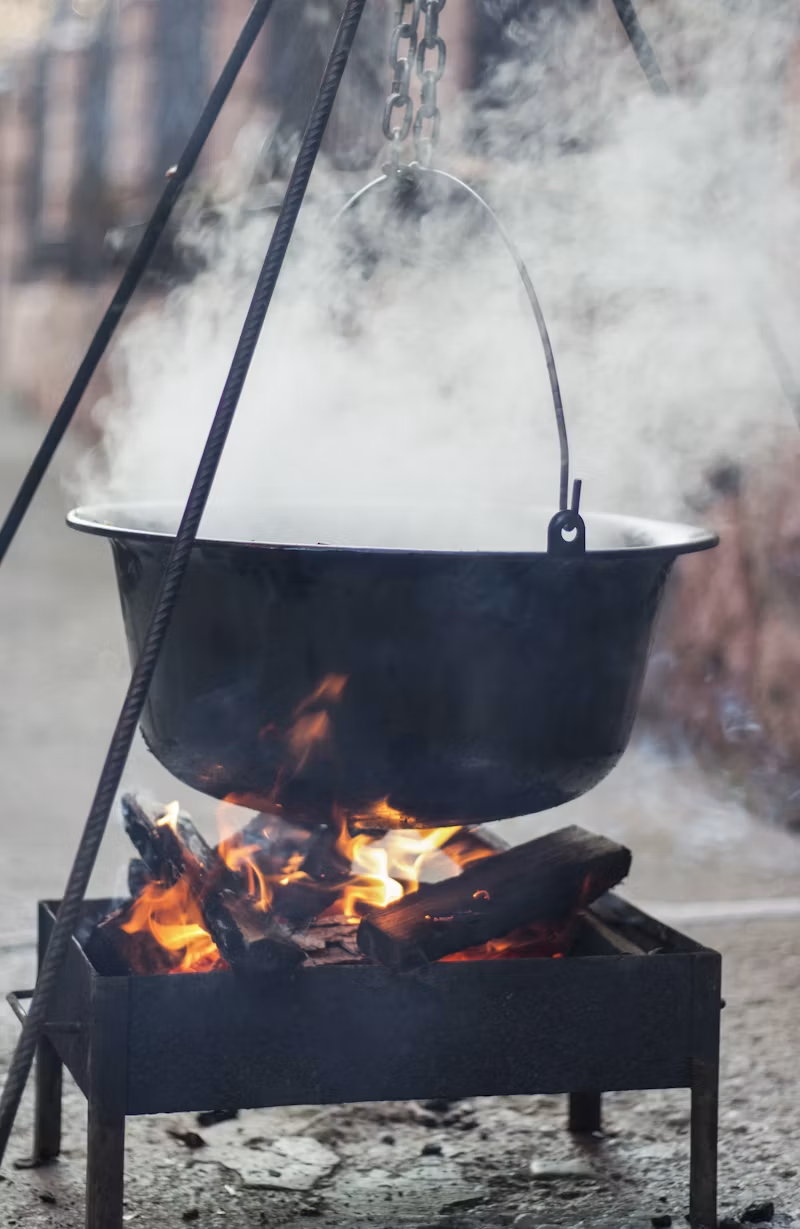
    Cooking pot hanging over an outdoor fire at sunset
    Photo by Barnabas Davoti on Unsplash

    The Hungarian word gulya refers to a herd of cattle, while gulyás means the herdsman. Accounts of the dish connect it with cattle herders cooking meat in a bogrács, a cauldron suspended over fire on the Hungarian plain.

    The earliest versions could not have depended on paprika as we now understand the dish: peppers reached Europe only after contact with the Americas, and paprika became embedded in Hungarian cooking later. The older idea was durable, seasoned meat that could be reconstituted with water. Potatoes and the now-familiar red seasoning arrived into the story over time.

    Food history is rarely a neat recipe card. What matters is that gulyás grew from the logic of outdoor cooking—meat, heat, liquid and an economical pot—before becoming a national symbol.

    Gulyás: generally the soupier relative

    Close view of vivid red paprika powder at a market stall
    Photo by engin akyurt on Unsplash

    Modern Hungarian gulyás or gulyásleves is commonly a soup containing beef, onions, paprika and vegetables such as potatoes and carrots. Caraway, garlic, peppers and small pinched noodles called csipetke may appear. It can be substantial enough to make the British distinction between “soup” and “main course” feel unhelpful.

    The technique begins with building flavour from onions and meat, then gently extracting the colour and aroma of paprika without scorching it. Paprika can become bitter when burnt, so many cooks take the pot briefly away from fierce heat before adding the spice.

    Pörkölt: closer to the British mental picture

    Pörkölt is a thicker meat stew with a concentrated onion-and-paprika sauce and less free liquid. Beef, pork, lamb or game may be used. It is often served with dumplings or noodles rather than containing potatoes as part of the dish.

    Many international recipes labelled “Hungarian goulash” resemble pörkölt more closely than gulyás. That does not make them inedible or fraudulent; it simply means the exported name became broader than its Hungarian use.

    Paprikás is another close relation. It commonly has a lighter, creamier sauce associated with sour cream, with chicken paprikash the best-known example in Britain. The boundaries are culinary habits rather than chemical laws, and households disagree.

    Czech and Slovak guláš

    Across Czech and Slovak cooking, guláš often means a thick stew served with bread dumplings, bread or another starch. Onions are central, paprika supplies colour and warmth, and the long cook turns an economical cut of meat tender.

    There are many variations: beef, pork, game, sausage, potato and even meatless versions. A pub bowl, a campsite kettle and a family Sunday version may all carry the same name while tasting quite different.

    The shared Austro-Hungarian history of the region helps explain the family resemblance. Recipes crossed borders and then became local. Trying to force every version back into one “authentic” template can erase the very history that made the dish interesting.

    Five practical principles for a good pot

    Give onions time

    Onions create sweetness, body and depth. Cook them patiently rather than burning the edges while the middle remains raw.

    Use fresh paprika

    Paprika loses aroma and colour as it ages. Store it away from heat and light, and replace a dull, dusty jar. Hungarian sweet paprika gives warmth and fruitiness without making the dish aggressively hot; hot paprika can be added with control.

    Do not scorch the spice

    Add paprika over moderate heat, often after moving the pan briefly away from the flame. Stir and introduce liquid before it catches.

    Choose meat for slow cooking

    Shin, chuck, shoulder and similar cuts reward time. A quiet simmer allows connective tissue to soften; a violent boil makes the cooking less even and the sauce muddier.

    Decide which dish you want

    For a soupier Hungarian-style gulyás, allow broth and vegetables to remain part of the bowl. For a thick pörkölt-like stew, use less liquid and reduce slowly. For Czech or Slovak guláš, think about the dumpling, bread or noodles that will carry the sauce.

    A note from a family-kitchen perspective

    Anita’s Kitchen is shaped by Hungarian, Slovak and Czech family traditions. That makes the differences worth preserving rather than correcting. A recipe inherited under the name “goulash” is part of that family’s record even when a culinary dictionary would file it elsewhere.

    When a full Perry recipe is published, it should say whose version it is, where it was learned and what has changed in a British kitchen. Until then, this article is a researched guide to the family of dishes—not a claim to reproduce Anita’s grandmother’s pot.

    Further reading on The Perry

    Browse this section

    Move naturally through the Anita’s Kitchen articles or jump back to the section overview.

    Back to Anita’s Kitchen

    Previous in Anita’s Kitchen

    You are at the start of this section.

    Next in Anita’s Kitchen

    Read next

    Bábovka for a British kitchen: the Central European cake with many family versions

    Sources and further reading

    Source check: 23 August 2026. Culinary terminology varies by region and household.

    Featured image credit: Photo by János Venczák on Unsplash.