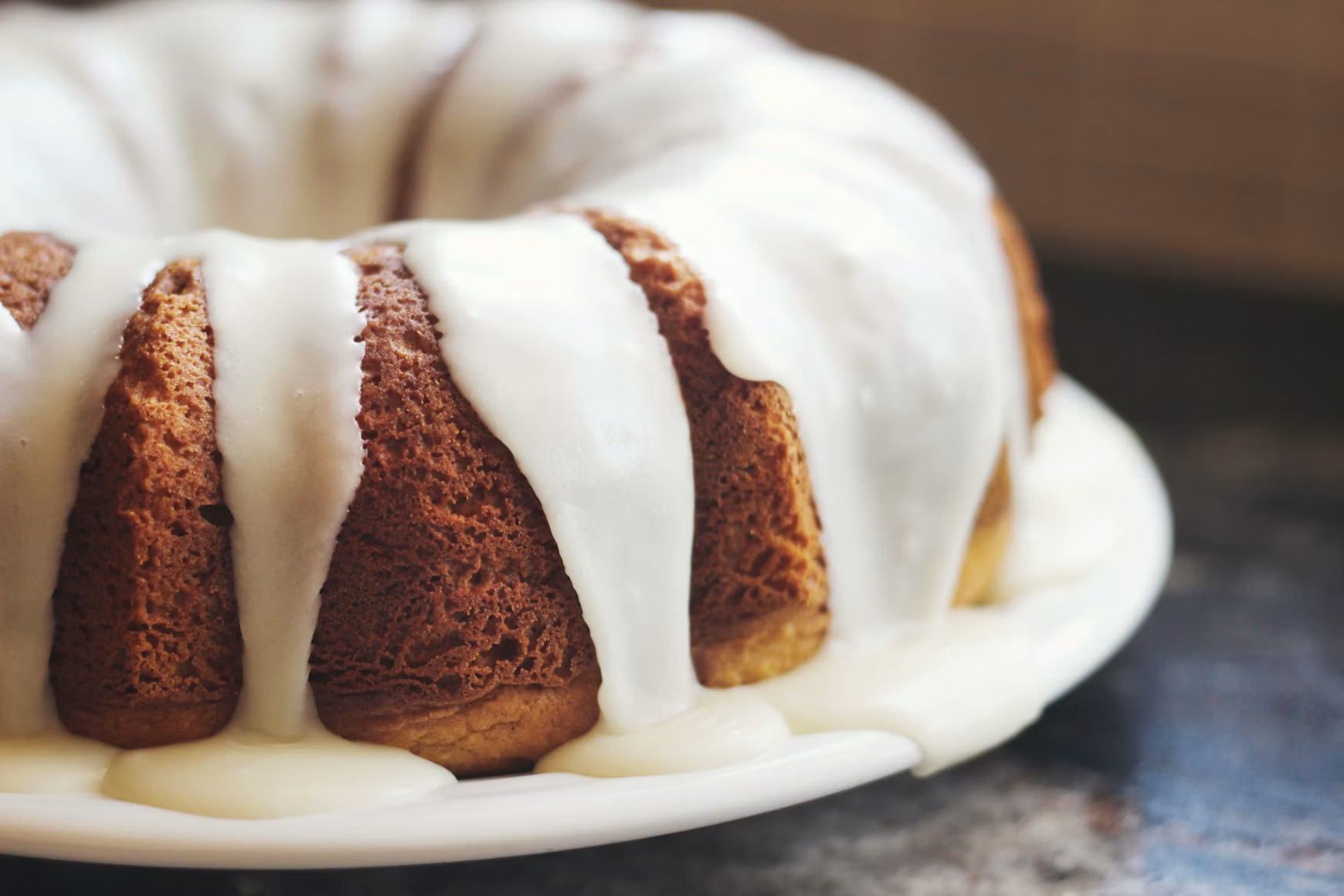
There is no single bábovka waiting to be authenticated. In one kitchen it is a light vanilla-and-cocoa marble cake; in another it contains ground walnuts, lemon zest, raisins, yoghurt, cream or tvaroh. Some versions are raised with baking powder, while older forms may use yeast. What unites them is the deeply shaped ring mould, the generous slice and the expectation that the cake belongs beside coffee rather than beneath restaurant spotlights.
In Czech it is bábovka; related cakes travel under names including Gugelhupf, Kugelhupf and Hungarian kuglóf. The mould’s ridges make the cake immediately recognisable—and make careful preparation essential.
A cake defined partly by its shape
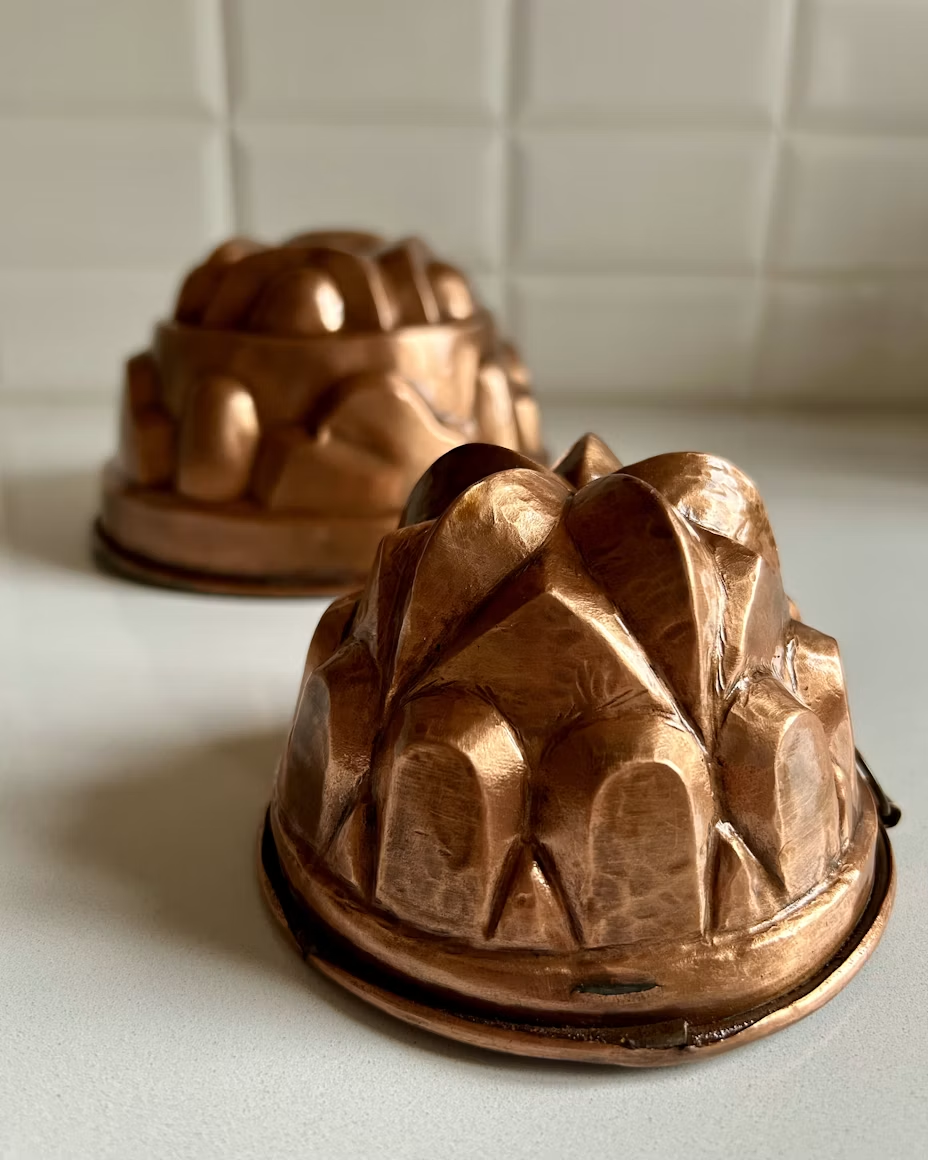
The European ring cake predates the American trademarked Bundt pan, although a modern Bundt tin is the practical British substitute. Traditional moulds can be ceramic, enamelled metal or decorative copper. The central chimney helps heat reach the middle of a substantial batter, while the ridges create more browned edge and a pattern needing little decoration.
That shape also creates corners where cake can remain attached. Most bábovka disappointments happen at one of three points: the tin was not prepared thoroughly, the batter was underbaked in a deep mould, or the cake was turned out at the wrong moment.
Why recipes differ so much
Bábovka is a category of home cake rather than one protected formula. Czech Radio and Czech Television recipe archives contain multiple forms, including whipped-cream, poured yeast, cup-measure and creamed-butter versions. Contemporary Czech recipe writers likewise describe countless household recipes.
The familiar marbled version divides a pale batter and flavours part with cocoa. Spoonfuls are alternated in the tin and lightly drawn together, creating a pattern that is revealed only when sliced. Walnut versions replace some flour or add ground nuts. Tvaroh versions are richer and moister. Yeasted versions sit closer to the older Gugelhupf tradition.
The useful question is therefore not “Which is the only real recipe?” but “What texture is this family trying to preserve?”
Translating the ingredients into a UK kitchen
Czech polohrubá mouka—a semi-coarse wheat flour—has no perfect everyday UK equivalent. Plain flour works in many modern recipes, sometimes with a small proportion of fine semolina or a lower-protein flour where texture needs adjustment. Do not automatically substitute self-raising flour if the source recipe already contains baking powder.
Vanilla sugar is common in Central European baking. In Britain, vanilla extract plus ordinary caster sugar is an accessible substitute, although it changes the dry-to-liquid balance slightly. Tvaroh is firmer and more acidic than much British cottage cheese; Polish or Central European shops often stock an appropriate curd cheese. Quark can work in some recipes but water content varies.
Egg and sachet sizes also differ. Weighing ingredients and recording the brands used makes a family adaptation repeatable.
Preparing the mould
Use softened butter or a neutral fat to coat every ridge, corner and the central tube. A pastry brush helps. Dust with flour, fine breadcrumbs, ground nuts or cocoa depending on the recipe, then remove the excess. A cocoa dusting avoids white marks on a chocolate cake.
Non-stick spray alone can miss the sculpted crevices. Old tins with scratches need more care; silicone moulds release easily but produce a softer, paler crust.
Fill the mould with enough space for the cake to rise. Tap it gently on a folded cloth to settle large air pockets without knocking out all the aeration.
Mixing for a tender crumb
Bring ingredients to the temperature specified by the recipe. When creaming butter and sugar, allow enough time for the mixture to become lighter. Add eggs gradually to reduce curdling. Once flour is added, mix only until combined; excessive mixing develops gluten and can make the cake tough.
For a marble, mix cocoa into the reserved portion without working it longer than necessary. Alternate the batters and make one or two restrained swirls. Enthusiastic stirring turns a marble into a uniform beige cake.
Baking and releasing
Deep ring cakes can brown before the centre is ready. Bake at the recipe temperature, shield the top loosely if necessary and test in more than one place with a skewer. The skewer should not carry wet batter, although a few moist crumbs may be appropriate for a rich version.
Allow the cake to settle after baking, commonly for ten to fifteen minutes, unless the recipe states otherwise. Turn it out too quickly and the structure may tear; leave it until completely cold and steam can make it cling. Loosen only where necessary with a thin, non-scratching tool, place a rack over the tin and invert decisively.
If it sticks, cover the inverted tin briefly with a warm damp towel. Patience is preferable to excavation.
Serving and keeping
A dusting of icing sugar is often enough. Glaze is possible, but the cake’s ridges and marbling already do the decorative work. Serve in thick slices with coffee or tea. Wrap the cooled cake well; richer oil, cream or tvaroh versions generally stay moist longer than lean sponge versions.
For The Perry, the eventual recipe should be Anita’s actual method, tested with UK ingredients and recorded in her own voice. This guide establishes the useful technique and context without pretending that a researched composite is a family inheritance.
Further reading on The Perry
- Goulash, gulyás and pörkölt: what are we actually cooking?
- How to plan a UK coastal walk: tides, transport, cliffs and the route home
- What to pack for a UK day walk: a useful list for changeable weather
Browse this section
Move naturally through the Anita’s Kitchen articles or jump back to the section overview.
Previous in Anita’s Kitchen
Goulash, gulyás and pörkölt: what are we actually cooking?
Next in Anita’s Kitchen
You are at the end of this section.
Sources and further reading
- Czech Television: třená bábovka recipe
- Czech Radio: whipped-cream bábovka
- Czech Radio Karlovy Vary: poured yeast bábovka
- Cook Like Czechs: an oil-based Czech bábovka
- Wikipedia: Gugelhupf — overview and references
Source check: 23 August 2026. Recipe variants and ingredient translations should be tested in the intended tin and oven.
Featured image credit: Photo by Jen Theodore on Unsplash.