
Driving anxiety is frustrating because it can make something you technically know how to do feel suddenly uncertain.
Perhaps local roads are fine but motorways are not. Maybe driving alone is the problem. You might dislike unfamiliar roundabouts, night driving, heavy traffic, bridges, tunnels or the feeling of being trapped in the wrong lane with an exit approaching.
The solution is rarely “just be confident”.
Confidence normally comes after repeated manageable experiences — not before them.
Featured photograph by Alicia Christin Gerald on Unsplash · View original and licence
Quick answer: Reduce unnecessary uncertainty before the journey, identify the exact situations that trigger anxiety, then rebuild experience gradually from easier drives towards harder ones. NHS guidance on facing fears supports gradual exposure rather than long-term avoidance, while current RAC advice recommends route planning, knowing your vehicle and using additional training where confidence is low.
First: identify the drive you are actually afraid of
“I'm scared of driving” is too broad to solve.
Which of these is really the problem?
- motorways or higher speeds;
- unfamiliar routes;
- driving alone;
- busy roundabouts;
- changing lanes;
- driving at night;
- traffic jams;
- bridges or tunnels;
- adverse weather;
- large vehicles beside you;
- returning after a long break or an incident.
RAC's guide lists many of these as common driving fears.
Choose the two situations that bother you most. Those become the focus of your plan.
Remove the anxiety you do not need
Some stress comes from the road. Some is created before the car moves.
Before a less-familiar journey:
- check the route while parked;
- identify the difficult section in advance;
- know one sensible alternative route;
- set the sat-nav before moving;
- allow extra time so a wrong turn is not a crisis;
- know where you could safely stop for a break;
- check fuel/charge and basic vehicle condition;
- understand the controls you might need, such as lights, demisting and driver-assistance features.
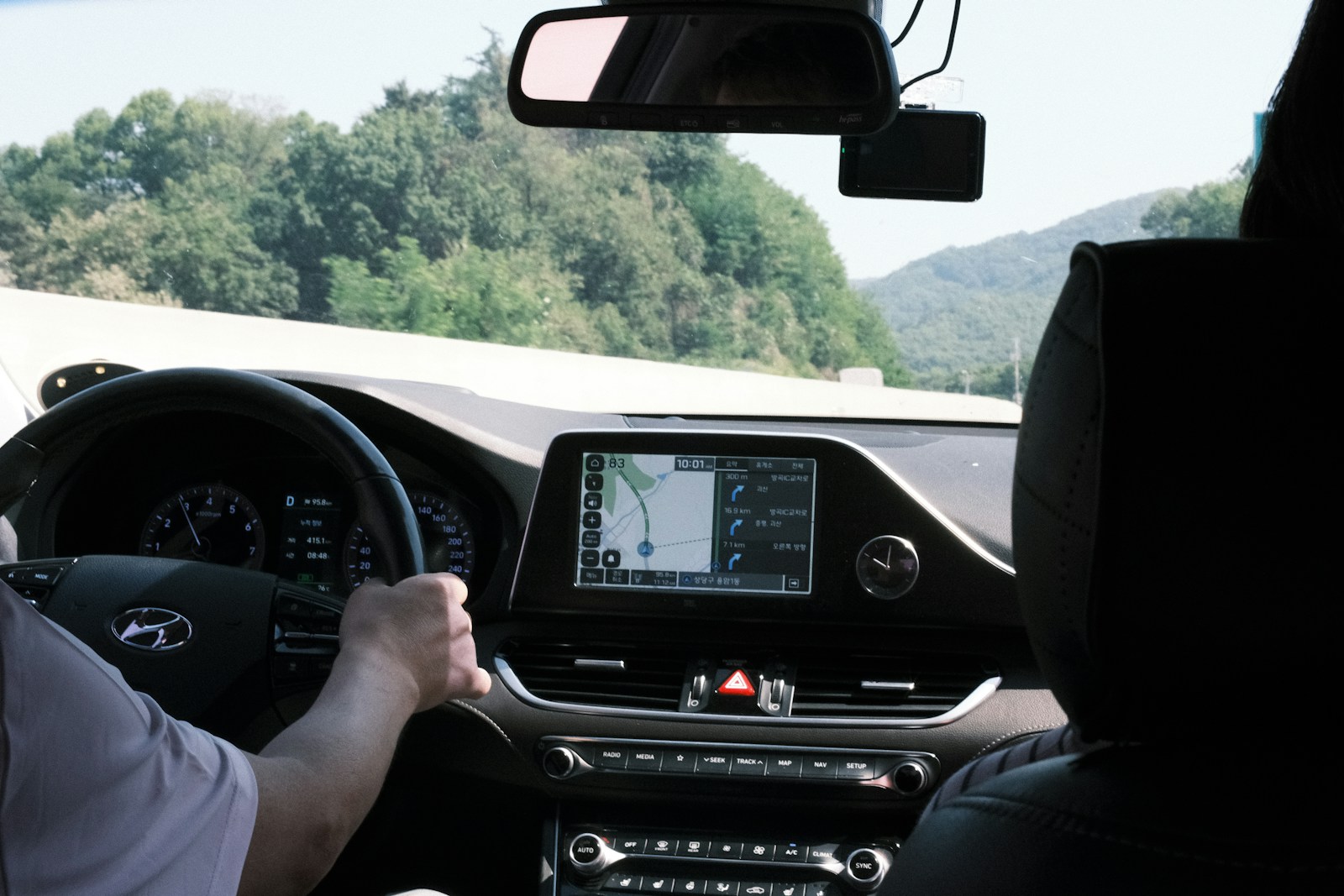
Photo by Hazel J on Unsplash · View original and licence
RAC advice makes a useful point: fear of the unknown can be reduced by becoming more familiar with both the journey and the vehicle.
This will not remove every anxious feeling. It removes avoidable uncertainty, which is different.
Build a confidence ladder — not a confidence cliff
NHS Every Mind Matters recommends breaking feared situations down, rating them and starting with the easiest rather than avoiding everything or jumping straight to the hardest situation.
For driving, a ladder might look like this:
Level 1 — familiar and quiet
A 10-minute route you already know at a calm time of day.
Level 2 — familiar but slightly busier
The same area with one busier junction or roundabout.
Level 3 — one unfamiliar element
A new destination reached mainly by roads you already know.
Level 4 — practise the specific fear with support
For example, a short motorway section with an approved driving instructor or trusted experienced driver where legally appropriate.
Level 5 — repeat independently
The same manageable challenge without adding another new difficulty.
Photo by Ijaz Rafi on Unsplash · View original and licence
Your ladder may look completely different.
The key is that the next step should feel uncomfortable but realistically manageable, not like a test you expect to fail.
Repeat steps. Familiarity is part of the exercise.
If motorways are the problem
Motorway anxiety deserves its own plan because avoiding motorways can make ordinary journeys increasingly complicated.
Start by refreshing the rules and road layout while you are not driving. Know how slip roads work, what motorway signs mean, how to plan exits and what to do in an emergency.
Then consider professional support.
The official DVSA Guide to Better Driving explicitly says its e-learning can help drivers reduce anxiety, boost confidence and drive safely. Refresher or motorway-confidence sessions with an approved instructor can also give you structured practice without expecting a friend or partner to become your teacher.
A sensible first motorway practice drive is not a cross-country journey. It might be:
- one known junction;
- a quieter time;
- route reviewed in advance;
- no deadline at the destination;
- repetition on another day.
Do not progress because you think you “should”. Progress because the current step is becoming more ordinary.
What should you do if anxiety rises while you are driving?
The priority is safe control of the vehicle, not completing a relaxation exercise.
Keep attention on the road. Do not start handling your phone, changing apps or doing anything that competes with driving.
If you need to stop, find a safe and legal place to pull over rather than making a sudden manoeuvre. Once parked safely, you can give yourself time to settle, rethink the route or decide not to continue.
If you feel medically unwell or your symptoms could affect safe driving, treat that as a safety issue rather than assuming everything is “just anxiety”.
Stop measuring success by whether you felt nervous
This matters.
A drive can be successful even if you were anxious.
Afterwards, write down:
What I predicted:
“I'll panic at the roundabout and won't know what to do.”
What happened:
“I felt tense, slowed my thinking down, followed the signs and completed it.”
What I learned:
“The feeling was unpleasant, but I could still drive safely.”
This gives your next drive evidence rather than reassurance alone.
Avoid the two extremes
Extreme 1: avoid everything
NHS guidance explains why avoidance can bring short-term relief while making feared situations harder to face in the future.
If you stop driving every road that makes you nervous, your safe territory can gradually shrink.
Extreme 2: force the hardest drive immediately
That is not the answer either.
RAC specifically advises that if anxiety becomes overwhelming, do not force yourself into driving in a way that could create danger for you or other road users.
The middle route is graded, safe practice.
A practical two-week confidence plan
Adapt this to your circumstances and only practise when you are fit and legally safe to drive.
Days 1–3: repeat a short familiar route.
Days 4–6: add one slightly harder feature.
Day 7: no “test”; review what actually improved.
Days 8–10: repeat the harder feature until it feels less novel.
Days 11–13: add one new route or condition.
Day 14: repeat whichever drive would be most useful in normal life.
The objective is not to make every drive easy in two weeks.
It is to replace avoidance → fear → more avoidance with practice → evidence → more choice.
When to get more help
A driving instructor can help with driving skill and confidence. If anxiety is broader, persistent or affecting daily life beyond driving, consider speaking to a GP or using NHS mental-health support such as Talking Therapies where appropriate.
If physical symptoms are new, severe or could have a medical cause, get medical advice rather than self-diagnosing them as anxiety.
For broader worry patterns, see our practical guide to overthinking at night.
The bottom line
Driving confidence is not a personality trait you either possess or lack.
It is often a record of how many manageable experiences your brain has collected.
Plan the journey. Remove avoidable uncertainty. Start smaller than your ego thinks you should. Repeat. Then move up one level.
You do not need to prove you can drive everywhere tomorrow.
You need to make the next useful drive a little more ordinary.